Showing posts with label #Authors. Show all posts

Friday, March 25, 2022

7 Questions With Author Donna Everhart


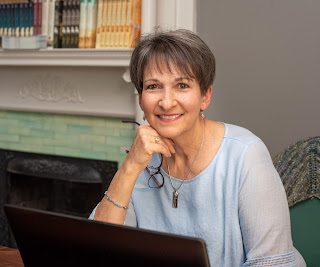
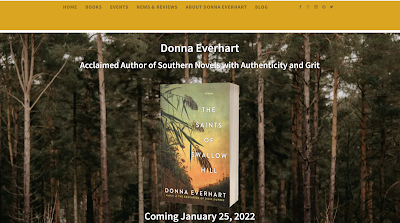
Donna Everhart is the USA Today bestselling author of Southern fiction with authenticity and grit, including the Indie Next List THE EDUCATION OF DIXIE DUPREE, THE FORGIVING KIND, THE MOONSHINER'S DAUGHTER, and the Southeastern Library Association Award-winning novel, THE ROAD TO BITTERSWEET. Born and raised in Raleigh, she and her husband live just an hour away in Dunn, North Carolina. Her website is https://www.donnaeverhart.com/

1.      How and when did you get hooked on history?

My interest was likely sparked years ago while I was still in school. I recall enjoying history classes better than math or science. However, like many students, once I was no longer in a classroom, other interests took over, and in my case this was my job, marriage, kids, etc. I became interested again as I started writing novels.

2.      What role does history play or has it played in your personal life?

I share what I learn with members of my family and friends, for one. This leads to some pretty interesting, personal discussions, and so often there are gold nuggets uncovered in these conversations. One thing I love is discovering something that is relatively unknown, and then sharing it with anyone who will listen.

3.      How does history play a part of your professional life/career?

As a novelist of Southern historical fiction, it's obviously a critical piece to the project I am currently involved with. As I begin to uncover facts, dependent on what I am writing about, I am painfully aware the exploration and discovery phase are key. I know whatever I uncover will become the building blocks of the story. History always creates the foundation, the stepping stone into a story.


4.      Why is studying/knowing history important?

Generally speaking, as we go about our day to day lives, oftentimes there is a disconnect between the past and the present. Unless individuals are motivated to understand the "backstory," i.e. history, not only their personal past, but beyond that to the country's past, etc., current actions or directions taken might seem meaningless.  Every single thing about our present existence is based on personal/direct and indirect historical events. Everything that has happened in the past is a direct result of where we are today. One particular thing of late is how many people are now interested in the ancestry, where they came from, and who they are. This is great, and a stepping stone for further explorations.

5.      What is your favorite period or aspect of history to learn about and why?

Pretty much anything from the mid-19th century up to the mid-20th century. I can't really put my finger on why this period pulls me in, other than I love the simplicity of the time. I am drawn to how people lived, worked, and socialized. I find it fascinating what they believed in, how they spoke, what they ate, and how they went about their day to day life. When I was growing up, all of Laura Ingalls Wilder THE LITTLE HOUSE ON THE PRAIRIE books were my favorites. Eventually I would go on to read massive tomes like SACAJAWEA, the captivity story of Cynthia Ann Parker called RIDE THE WIND, ANDERSONVILLE, and POCAHONTAS, and many, many other historical fiction books. Of course these were novels, with embellishments and made up story lines, but they were also filled with facts.


6.              What do your novels have in common? Is there a common thread running through them?

While they're stand-alone novels, if there is a common thread, it's that the they're Southern historical fiction. Generally, I like to take the current events of the story's time, and write about those challenges. For instance, in THE ROAD TO BITTERSWEET, the 1940 flood in the NC Appalachian mountains is the inciting incident. For THE FORGIVING KIND, racism, bigotry, homophobia, and cotton growing are focal points. (timeframe 1955) In THE MOONSHINER'S DAUGHTER, the illegal production of 'shine, and the history of the government sending revenuers to try and control are brought into focus. (timeframe 1960) In my latest, THE SAINTS OF SWALLOW HILL, I consider it a standout novel because I am writing about an industry many were unaware of - the turpentine camps of The Great American South, set during the Depression era.

7.      How important is historical research in your writing?

It's absolutely critical, and with the latest book, THE SAINTS OF SWALLOW HILL, the research was extensive, and intensive. I wanted historical facts I intended to include to be as accurate as possible. To achieve this I attended a demonstration on distilling pine gum into tar, pitch and turpentine, as well as using facts about this uncommon work documented in dissertations, and theses. I studied how labor camps operated, the debt peonage systems they used, the Depression era, and much more. In all of my books thus far, I have never had a reader come forward to say I got something wrong historically. (knocks on wood) I try to be meticulous, and question everything before I put it in a novel.


Wednesday, November 25, 2020

7 Questions With Michael Tucker, author of the Cracker series


Born and raised in rural central Florida, Michael Tucker has lived and absorbed the very fabric of the Crackers. He embodies the voice of his Scots/Irish and Creek Indians in his novels about old Florida. His books are available on Amazon.com and at other booksellers, or you can visit his website:  http://www.michaelcalhountucker.com/ 


1. How and/or when did you get you hooked on history?

Born in 1943 in Pasco County, lived in orange groves, country, or in small villages ( Cedar Key, Gulf Hammock, Otter Creek etc. ) Until I was 13 we had wood cook stoves and fire place for heat ( It was a constant hunt for fire wood )  and  carried water from a well, hand pump or creek. Once a week my brother and I had to fill Mother's wash pot and two #2 tubs for rinse water before school. And "out houses". We had gardens and chickens, Mother and Grandmother caned vegetables that people brought to them for shares, until I was thirteen and we moved to Williston Fl. where I saw my first miracle "Propane cook stove", running water, indoor bathroom and elec. lights. No more hunting fire wood or hauling water ! Went to school with no shoes until Williston. (7th grade)

What role does history play or has it played in your personal life?

The rules we were taught growing up was simple--You didn't bother other peoples things, when you went fishing or quail hunting in other peoples farms/ranch you made sure the gate was closed behind you and you don't shoot at the cows. Your neighbor didn't have to ask for your help, you just gave it when needed. I have spent my life trying to live by that independence.

How is/How was history a part of your professional life/career?

 I was taught that if you wanted something you made it happen yourself.

Why is studying/knowing history important?

Your values came from somewhere.  I raised my two daughters with the values I was taught by my parents, who was taught by their parents, etc.

What is your favorite period or aspect of history to learn about and why?

The period after the Civil War, when the south had to survive and rebuild.

6 Tell us about the Cracker book series and how it came into being.

I have always wanted to write as long as I can remember, I would write short stories and then throw them away because they weren't finished. I started the Cracker series when my wife and I was cruising on our sailboat ( we spent twenty years living and cruising the Eastern Caribbean ) and after our last cruise ( almost eight years ) we found out my wife's mother had Alzheimer's and we came back to care for her. ( My wife was the only child ) I decided it was time to finish my novel and had decided to write about all the things I had heard from my Dad and Uncles around a fire at night at family reunions. Between stories around the fire and researching my family history in Florida it turned into a historical fiction series. I am now working on the third novel in the series. Cracker Stories are unique to Florida's history.

7 What makes the Florida Crackers unique and worth reading and writing about?

Cracker stories are unique to Florida. The Crackers were a group of people after the civil war, who rounded up wild Spanish cows left to roam wild for over 300 years with cow whips cracking over the cows head to move them out of the scrubs and palmettos and push them to Tampa or Punta Rassa where they were bought with Spanish gold doubloons and then sold to Cuba. ( Confederate money was no good after the civil war ) Gold from the sale of cattle was the only hope for money for many.


Sunday, September 9, 2018

7 Questions with Author Jeanette Watts

Jeanette Watts is a writer, a dance instructor, a costumer, an actress, and a very poor housekeeper. Her previously published historical fiction includes Wealth and Privilege and Brains and Beauty. Her most recent book is Jane Austen Lied to Me. Her website is www.jeanettewatts.com 
 

1.      How and/or when did you get you hooked on history?
It was fourth grade, and I discovered this AMAZING section in the library at school. It was straight back from the entrance, on the left hand side, in the corner. It was… the biography section.

In the next three years, I think I devoured every book in there. Books on Betsy Ross. Florence Nightingale. Juliette Gordon Lowe. Elizabeth Blackwell. Madame Curie. Years later, I was confused by all the feminists saying that History courses were really the history of men. It took me a while to realize my broader knowledge of history came from my independent reading.

By high school, history was my favorite subject. I moved to a different state in the middle of the school year, and I terrorized my poor high school history teacher my sophomore year. The textbooks at my new school were much less good than the textbooks at my previous school - and there was a copy of the better textbook on the shelf in my new classroom! The teacher made the mistake of letting me borrow it.

I would read the chapter from the school’s textbook, then I would read the same episode of American history from the other book. Next day in class, while the teacher is discussing the material, my hand would inevitably go up. “You know, that’s not how it REALLY happened. It was actually a lot more complicated than that. It was a logical process, but there were more like 15 things that happened to get from A to Z, not the 4 that are described here….” The Civil War, the Industrial Revolution; I specifically remember a chapter on the Haymarket Square riot and the labor movement that was particularly poorly written in the one textbook. I think I came to the conclusion at that point that I cared a lot more about history than my teacher.

2.      What role does history play or has it played in your personal life?
There are so many huge avenues of history that run through my life.

1) Clothing. I’m an avid seamstress, and almost everything I sew is historic costuming. I’ve worked for local history museums in Ohio and North Carolina, and simply can’t be a docent out of costume. How am I supposed to talk about the history of bicycles, if I’m not wearing a bloomer costume from the 1890s? If I’m giving a tour of a house built in 1800, I should be dressed properly for 1800. I have full court garb for the English Renaissance, Regency dresses, hoop skirts, bustles, flapper dresses. This last month I was working with a group on aviation history, so I made a Pan Am stewardess’ uniform. Had to be done.

2) Dance. I’m a dance instructor, and more specifically, I teach Vintage dance. The waltz as it was done in 1800 is not the same dance that was done in 1860, which is not the dance as it was done in 1914. The Victorians mostly favored set dances over couple dances. In the 1870s, however, the young folks were doing dance party games they called “Germans” which were mostly couple dances, although there was no doubt this was about the larger social group, not about two people facing each other for three minutes.

3) Acting. I have played Katharine Wright, the younger sister of the Wright Brothers. I have played Grace O’Malley, the Irish pirate. And I have played Brigid Hussey, Countess of Bedford. In all of these cases, it might have been possible for some people to simply stick to a few dry facts, recite a few lines. But most of these roles were improv acting, not stage performances. When a small child asks a question, I need to be able to answer it, in character, and give an accurate answer. I am this child’s window into the fascinating story of our past. It’s the best storybook, ever.

4) Writing. My first two novels are set in Pittsburgh, Pennsylvania during the Industrial Revolution. While I was wallowing in research on the first one, a friend looked at me and said, “You know it’s historic FICTION, right?” I just shook my head, and explained that if I don’t know what it smells like, and tastes like, and sounds like, I don’t know enough to write about it yet. My current novel, Jane Austen Lied to Me, is a modern-day romantic comedy, and it perplexes me sometimes when it’s time to go out and sell it. The only way I know how to sell books is in costume. (See #1 above…) It was a fun departure, but my next project is back in my comfort zone. I’m tackling New York at the Turn of the Century, this time.

3.      How is history part of your professional career?
Your question, and my answers, say a lot about me… apparently I don’t make a distinction between my personal life and my professional life.

4.      Why is studying/knowing history important?
It may be a tropism, but it’s true: those who do not learn from history are doomed to repeat it. Unfortunately this is may be more true for societies than for individuals. History helps explain who are, and how we got here. This is true for each of us as people, and us as A people.

5.      What is your favorite period or aspect of history to learn about and why?
Well, if we go by the number of books I own on individual topics, it’s just about a tie between the American Civil War and the Industrial Revolution. Why? The flippant answer is the clothes. Hoop skirts and bustle dresses, what’s not to love?

I can blame my love of the Civil War on Gone With the Wind. I met the book in 8th grade, and I was hooked. The honest and complex storytelling was compelling, but so was the historical detail. Scarlett gets bored while Grandma Fontaine gives a hair-raising eye witness account of an Indian massacre. She reads the newspaper filled with little details, including a sly reference to abortion. And of course there’s the initial reaction to secession and the burning of Atlanta. While that sparked my interest, the real-live characters who fought the war held my interest. I adore Grant and Sherman. They aren’t perfect romantic heroes, they are flawed humans struggling to do the best they can in the times they face. Did Grant drink, and was Sherman crazy (his own term for it)? Oh, I hope so.

The Industrial Revolution I fell in love with while writing Wealth and Privilege. It was hard figuring out WHEN my novel was set. There was always something messy and interesting going on in Pittsburgh - fire in the 1845, a cholera epidemic in the 1850s, the war in the 1860s. I decided to start in 1875 during a bad recession, touched on the railroad riot of 1877, Garfield’s assassination in 1881 (which wasn’t Pittsburgh history, but the whole country was affected), and the Johnstown Flood in 1889. If I would have gone further in time, there was the Homestead Strike of 1892, the opening of Kennywood Park in 1898, the annexation of Allegheny in 1907…

Once I settled on 1875-1889, and got into the research, I fell in love. It’s a vibrant time, full of tumult, full of change, full of progress, full of horrors. We created new problems for ourselves as a society.  And we groped our way forward towards solutions.

6.      What  is the story behind Jane Austen Lied to Me? 
I was driving home from the Jane Austen Festival in Lexington, Kentucky when the premise came to me. And you know how it goes sometimes; once you think something, you can’t UNthink it. So I had to run with it.

I am always a questioner. It gets me in trouble, I’m sure, but I can’t NOT ask questions. So the question I had to ask was, as much as we love Jane Austen, and romanticize her characters and stories, how would those same characters and situations really play out, today? For example, if you meet a guy, and he’s a rich jerk, is he necessarily going to turn out to be a nice guy when you get to know him better?

7.     Is there any part of your life that doesn't have to do with history?
Well, we just moved to a house that was built in 1938, so it’s got a touch of history about it. My husband and I have been married for 27 years; we have a history. My car is a 2007 Mazda, once cars have 237,000 miles on them, I think they have a history.  The Out box on my email has 9,669 messages going back as far as 2006. There’s some history, there. The contents of my sewing room include a work basket from my mother-in-law, pincushions from my grandmother, thread from grand-aunt Rose, and a cabinet from my girlfriend’s great-aunt Ludie.

So, I think the answer is: nope.

Friday, July 13, 2018

7 Questions With Cele Seldon, Co-Author of 100 Things To Do in Charleston Before You Die

Lynn and Cele Seldon make up the team that is Seldon Ink and have spent more than 25 years as travel journalists. With a keen focus on the Southeast and a particular love of the Carolinas, they have written hundreds of magazine and newspaper articles about the region. Their work has appeared in Southern Living, Taste of the South, The Local Palate, Cruise Travel, South Carolina Living, South Carolina Magazine, TrailBlazer, Atlanta Journal-Constitution, Charlotte Observer, various in-flight publications, and many AAA magazines. Their new book, 100 Things to Do in Charleston Before You Die (Reedy Press) was released in February 2018. Lynn also contributed to the highly anticipated anthology of essays honoring Pat Conroy, Our Prince of Scribes (University of Georgia Press), due out in Septmeber. Follow along on their adventures at www.seldonink.com or @seldonink. They are presenters at the Decatur Book Festival 2018, Labor Day Weekend.


1. How and/or when did you get you hooked on history?
I’m not sure I would say that either of us are hooked on history. But we are hooked on travel. And so much of travel is history-based. You can’t visit the South without getting a huge history lesson on the Civil War. And you can’t visit New York City without learning how our nation evolved with the arrival of the first immigrants. And you can’t visit Greece without a history lesson on ancient Greek civilization. You get my point. History is wrapped up in travel and travel is wrapped up in history. And we were both bitten by the travel (and history) bug as young adults.

2.  What role does history play or has it played in your personal life?
The opportunity to travel has opened up a world of curiosity. And much of that curiosity centers on history. How did cultures develop? How do (and did) people live, both in our own culture and in the cultures of others? History has made us stop to ask why, how, when, where. And we use that curiosity to constantly learn about the world around us.

3.  How is history part of your professional career?
In writing travel stories for magazines and travel books, like 100 Things to Do in Charleston Before You Die, we are constantly having to research the history of a place, people, building, attraction, customs, etc., and translate that into an interesting and compelling story of where to go and what to see. Although we travel and visit places to see what they offer today, it’s the history of the location or destination that complete our stories.

4.  Why is studying/knowing history important?
Everyone should have a curiosity in the world around them. The hows and whys are as important as the what and wheres. Life would be pretty boring if we didn’t question or ask about the past. And how can we make the future better without knowing how we got here in the first place. To me, they go hand in hand.

5.  What is your favorite period or aspect of history to learn about and why?
I’m kind of partial to the WWII era. As a Jewish woman, I’m fascinated by the Holocaust and all of its implications. And how the world changed after the war. It really was the beginning of a fascinating era. As a Southerner, the Civil War era is also part of my fabric.

6.  What sets Charleston apart as a destination?
Charleston has become the darling of the Southeast for her grace, beauty, history, and oh-so-Southern dining and hospitality. She charms visitors with her lush Lowcountry landscape, Civil War history, antebellum plantations, cultural and artistic opportunities, James Beard Foundation award-winning chefs and restaurants, shopping, and the gracious and welcome reception from residents. Naturally you can find tons of suggestions of where to go, what to see, where (and what!) to eat, outdoor recreation, events and entertainment, and where to shop ‘til you drop in our new book, 100 Things to Do in Charleston Before You Die, available on our website, www.seldonink.com.

7.  How did you become travel journalists? Any advice for others who want to become travel journalists?
Lynn came by it honestly as a young army officer stationed in Germany who took advantage of being in Europe. He traveled around on weekends and started writing for Stars & Stripes, the Armed Forces newspaper, as a creative outlet. Once he returned to the states, he had amassed a portfolio of clips and decided to try making a career of it. I, on the other hand, went the easy route and married into his already established travel journalism business after a corporate career in marketing. As far as advice goes, visit a book store and buy magazines and study what they are covering. Research the publication, the editor, and the topics extensively. Then travel with your eyes wide open. Look for places and people (and history!) that inspire you. And that would make a good fit for your targeted publications. It really isn’t rocket science.

Friday, June 2, 2017

7 Questions with Kevin Hicks of History Squad

Kevin Hicks is a veteran soldier and policeman.  Kevin set up the History Squad over 20 years ago to deliver live history workshops in schools and costumed guided castle tours and has now set up Squaducation in order to create 60 second histories.  This new online history resource delivers hundreds of bite size history films with ready made lesson plans and a clever sharing function so teachers can safely share films with students.  Spanning Ancient History right through to World War One, 60 second histories is a resource well worth exploring.  Squaducation.com The History Squad Website is www.historysquad.co.uk


1.      How and/or when did you get you hooked on history?
I first became hooked on history as a young boy around ten years of age.  I had listened to the stories of both my grandfathers who had fought in the second world war and also to the experiences of my mother and father who lived through the Blitz in Birmingham, England.  So playing at ‘war' was what we kids did until I discovered Robin Hood!  My father took me to Sherwood Forest to see Robin Hood’s tree which is known as the Major Oak.  Well that was it, at the tender age of 6, I was to be Robin Hood and with a subsequent visit to Warwick Castle I was well and truly hooked on history and still only a boy of around ten years of age. Within two years I had my first real long bow and quickly realized that I could shoot, I think it must be in my blood.

2. What role does history play or has it played in your personal life?
It is fair to say that history is the single most important part of my life outside of my family; any trips we make always have a history angle bur fortunately my wife is very tolerant and my son follows in my footsteps.

3.      How is history part of your professional career?
If it wasn’t for history I wouldn’t have the career I have today.  I was injured as a soldier in the British Army by a bomb blast and injured again as a serving Police Officer which meant that I was medically discharged.  After a period of convalescence I was invited to give a talk and display about our English Civil War at a local school.  I had been involved with a re-enactment society and therefore had the musket and uniform of a 17th Century musketeer.  After this first successful display I was invited to another school after which a teacher made a simple throw away comment that it was a shame that it was the musket I fired and not the longbow.  I asked her why and she told me that they would love to find someone to shoot a longbow at a local castle for her school group.  Within three weeks I had taken her school group around Chepstow Castle and it was so successful I still take school groups to Chepstow to this day, over twenty years later.  During this period, History Squad was born as I created a series of history workshops and delivered them in the classroom.  As an historical interpreter and educator, I now deliver workshops that span from Ancient Egypt right up to my own experiences during the Cold War in Berlin. I have around 150 schools on my books, and as well as the live school visits I make, I have also set up a company called Squaducation and created an online history film resource for schools called 60 Second Histories, so my professional career for the past 23 years has been nothing but history.


4.      Why is studying/knowing history important?
I have a great belief that we as people should know who we are and where we are from, if you know and understand your own past and heritage then perhaps you find your place in the future

5.      What is your favorite period or aspect of history to learn about and why?
I have several favorite periods of history, Medieval, WWI, The rise of the Nazis and the Holocaust.  With regard to the Medieval period, I have shot the longbow for over fifty years and have been fortunate to have worked at some of the finest Castles in England and Wales as well as Sherwood Forest so Medieval history really is part of my life.  The study of WWI came about because of the loss my family suffered, my great grandfather was killed in 1918, he died as he charged over the top during the second Battle of the Somme.  In studying the action he was killed in I was drawn into the study of the whole period and occasionally travel over to France and Belgium with school groups to study the Battlefields.

6.      What is the History Squad and how did it come about?
History Squad came about due to demand from schools, if a teacher asked if I could cover a new period I carried out the research and created a character to fit the role.  At first I called my little business Through the Eyes of a Soldier as all of our characters were military but as I expanded the range of characters, many of which were civilian and we became more professional, History Squad was born.

7.      What are the keys to creating engaging historical presentations?
For me, I believe that the story is the hook.  Whether it is a class of children or hundreds of adults in an audience, it is always the story that engages people and then making it real is very important too.  I am very lucky having fought as a soldier as I can use my own experiences of combat to tell the story of others. Also researching every aspect of a subject, what the people ate and why, where did they go to the toilet, it’s these personal and sometimes intimate details that count and help to keep students hooked. 


Wednesday, April 26, 2017

7 Questions With Rhetta Akamatsu, Author

Rhetta is an author and journalist who is fascinated with history, especially social and cultural. She loves to write about music, especially blues, and is happiest when she can combine history and music. Her most popular books so far, however, are The Irish Slaves and Haunted Marietta. She lives in Marietta with her husband and children. https://rhettasbooks.com/


1. How and/or when did you get you hooked on history?
When  I  was about 8, my best friend got a series of books about famous women. At about the same time, I read The Little House On the Prairie books. I believe that started it.

2. What role does history play or has it played in your personal life?
I love genealogy and have traced some of my ancestors back over a thousand years. I also enjoy visiting cemeteries, museums, and abandoned buildings.

3. How is history part of your professional career?
As a writer, I love to weave history into every subject I write about, including ghost stories and music.

4. Why is studying/knowing history important?
History helps us understand ourselves and others. It gives us insight into current events and perspective on everything from relationships between individuals to relationships between countries. 

5. What is your favorite period or aspect of history to learn about and why?
That is almost impossible to say.  It changes all the time but right now it is probably the late 19th and early 20th centuries. So much happened in that period that influenced our modern  world.

6.You've written about variety of subjects. How do you select a topic? Is there a common thread in your research and writing?
I get interested in a subject and  if I can't find a book that answers my questions I research and write  one. The common thread is the  stories of ordinary people,

7. Tell us about your latest book or your current project or both?
My latest book came out last Christmas. It is a history of blues in Georgia from Blind Willie McTell to the present. 


Wednesday, May 4, 2016

7 Questions with Caroline Wazer, Staff Writer at HistoryBuff.com

Caroline Wazer is a staff writer at HistoryBuff, a new online community based around a love of history. She's also a Ph.D. candidate at Columbia University, where she is working on a dissertation about urban sanitation and conceptions of health in the early Roman Empire. 

1. How and/or when did you get you hooked on history?
I've been obsessed with history for as long as I can remember. As a kid, I devoured historical fiction—I was especially interested in reading about everyday life for children in the 19th century, but could get excited about any time period. It probably helped that I grew up in Massachusetts, which is chock-full of historic sites.

2. What role does history play or has it played in your personal life?
Many of my friends are also very interested in history, even if they aren't historians professionally. I'm also a sucker for well-done historical TV shows, like HBO's Rome and Cinemax's The Knick

3. How is/How was history a part of your professional life/career?
In addition to being a staff writer at HistoryBuff, I'm also finishing my Ph.D. in ancient history—so not a day goes by that I don't do some form of work related to history. I love diving deep into historical sources, but also think it's very important for academic historians to engage with the broader public. I'm very lucky to be able to do both professionally.

4. Why is studying/knowing history important?
History helps us make sense of the world around us. The really fun thing about history is that the more you learn, the more seemingly unconnected parts of the past start to fit together, like a puzzle. 

5. What is your favorite period or aspect of history to learn about and why?
I have a lot, but one aspect that always fascinates me is how societies throughout history have dealt (or not dealt) with urban sanitation. It's a fun topic because it pulls together a lot of different aspects of history: the history of science, economic history, political history, demographic history, cultural history... the list goes on. It's also full of gross anecdotes that are great fun to pull out at dinner parties.


6. What’s the story behind HistoryBuff?
HistoryBuff is a brand-new platform that encourages any and all people who love history to come together and share fascinating stories. Most of our writers and readers don't have history degrees or jobs in history, and we think that's great. We've been blown away by how quickly our audience has grown since we launched just four months ago—and it's amazing to see how excited our readers and community members are to learn about and have fun with history.

7. What stories currently on HistoryBuff.com do you find most interesting?
One piece I recently wrote—about a 1936 WPA-funded, all-black production of Shakespeare's Macbeth that became a smash hit around the United States—has stuck with me. The Great Depression is not a period I've spent much time on since high school, and it was a surprise to come across this cutting-edge piece of art that ended up being really popular even in the Jim Crow South. 


Wednesday, February 17, 2016

7 Questions with Stephen Knott, Co-Author of Washington and Hamilton: The Alliance That Forged America

Dr.  Stephen Knott is a Professor of National Security Affairs at the United States Naval War  
College.  Prior to accepting his position at the Naval War College, Dr. Knott was Co-Chair of the Presidential Oral History Program at the Miller Center of Public Affairs at the University of Virginia. His books include The Reagan YearsAlexander Hamilton and the Persistence of MythSecret and Sanctioned: Covert Operations and the American PresidencyAt Reagan’s Side: Insiders’ Recollections from Sacramento to the White House; Rush to Judgment: George W. Bush, the War on Terror, and His Critics, and Washington and Hamilton: The Alliance That Forged America (2015). 

1. How and/or when did you get you hooked on history?
I got hooked at quite a young age. My father loved history, and I remember him reading to me out of children’s history books when I was a child. He would also take me to historic sites such as Gettysburg, Fort Ticonderoga, and to a number of sites throughout New England. I grew up in Massachusetts, so I happened to be born in a state with a rich history, especially from the revolutionary war-era. Lexington-Concord were not all that far removed, as was the Freedom Trail in Boston. So in a sense I was born into a ready-made historical environment.

2. What role does history play or has it played in your personal life?
My father was older than most dad’s when I was born, and he had a great-uncle who had fought in the American Civil War (for the South, ironically). He also remembered having his hair cut by a Civil War veteran when he was a child. The personal connection my father had with the Civil War had quite an impact on me.

Our love of history was a deeply shared bond between the two of us. My Dad was a skilled painter, so I would occasionally find a photo or a painting in a book that I liked and I would asked him to do a copy for me. He would, and the walls of my bedroom were lined with these paintings of battles from the American Revolution or the Civil War. I still have many of them, and they are treasured heirlooms.

3. How is/How was history a part of your professional life/career?
When it came time to enter college it was an extremely close call whether I would major in history or political science. I ended up majoring in the latter, but only because some advisor told me that political science would be more “marketable.” So my doctorate is in political science, but American history has always been my first love.  My books tend to focus on the American presidency, but with an historical focus. In fact, the way I teach American government, and the entirety of my research efforts, are all conducted through the lens of history. I tell my fellow political scientists that I am a “closet historian.”

4. Why is studying/knowing history important?
It’s a cliché, but there really is nothing new under the sun. Our toys and our trappings may change, but human nature is fixed in my view. Therefore, I believe we can learn a lot from the actions and actors of the past. That said, I am sometimes shocked at the lack of historical knowledge on the part of political scientists; it strikes me as next to impossible to be a good teacher of American politics or international relations without having a deep understanding of history.

5. What is your favorite period or aspect of history to learn about and why?
American history, 1776-2015. OK, that was a weak attempt at humor. But I do love the entirety of American history, although I am probably the weakest on the Gilded Age and somewhat on the progressive era. My favorite period would be the founding era and the early American republic, the Civil War, and the 20th century from World War II to the present. My love of history comes naturally to me; I honestly don’t understand people who seem to care less about it. That is very alien to me….  

6. What was the basis of the bond between Washington and Hamilton?
Theirs was an unlikely bond, for Washington and Hamilton could not have been more different. Washington was a gentleman-farmer from the patrician colony of Virginia and the owner of a great estate enriched by the labor of African slavery.  Hamilton, on the other hand, was as John Adams brusquely put it, the “bastard brat of a Scotch peddler” and an immigrant from the West Indies.  A self-made man, he made his way to America on his own and earned his positions in the army and in the government.  Despite their differences, Washington and Hamilton shared a lot of common ground. Unlike many of their great contemporaries, Washington and Hamilton saw war up close and personal; they were brothers in arms in a sense, and as any combat veteran will attest to, combat is a bonding experience like no other. As a result of their wartime experience, they concluded that the collection of states that fought the American Revolution needed to take the next step and begin, in Hamilton’s words, to “think continentally.” They wanted Americans to think of themselves as Americans, not as Virginians or New Yorkers. They were both guided by a sense of American nationalism and worked closely together to assist in winning the American Revolution, adopting the Constitution, and creating the institutions necessary to secure liberty at home and respect abroad.

7. How would the U.S. have been different if Hamilton didn’t exist?
Hamilton’s economic vision was contrary to that of Jefferson’s, and as such the United States might not have moved (or at least not moved as quickly) in the direction of becoming a manufacturing nation. I would also argue that Hamilton’s economic policies (a national bank, tariffs to protect American manufacturing, and the stabilization of the nation’s finances which enabled the nation to establish a good credit rating) all contributed to the overall rise of the United States as an economic superpower. It is also possible that the Union might have disintegrated more rapidly than it did had there been no Washington and Hamilton. Their vision of an America where its citizens thought “continentally” was accomplished in part by creating institutions which would bind the people to the national government, not their respective states. For example: the aforementioned national bank; or the assumption by the national government of the state debts from the Revolutionary War; or Washington’s proposal for a national university (which did not come to pass). All of these steps contributed to a sense of American “nationhood.”

Additionally, Hamilton laid the theoretical blueprint in The Federalist Papers for an “energetic executive” – a blueprint followed closely by the first president. From the beginning to the end of this most important first presidency, Washington followed Hamilton’s advice, much to Thomas Jefferson’s distress. Remove Hamilton from Washington’s cabinet, and you would have set a number of very different precedents. Interestingly, Washington understood how vital Hamilton was to his presidency, supporting Hamilton through the embarrassing revelation of his extra-marital affair, while at the same time cutting off all contact with Jefferson, who had deceived him on multiple occasions.

Wednesday, December 16, 2015

7 Questions With Ron Smith and Mary O. Boyle, Authors of Prohibition in Atlanta: Temperance, Tiger Kings & White Lightning

Although Ron Smith and Mary O. Boyle have both long held a dream of writing and publishing a book, the dream came to fruition because a commissioning editor for The History Press made contact. They’d been maintaining a blog about beer in the Atlanta area. The editor found some history articles on the blog and asked if Ron would consider writing a book on Atlanta beer to be part of their American Palate series. Ron recruited Mary to be co-author and they brewed up a book.

Ron’s background is in biology and environmental sciences, though he’s long nurtured a deep interest in history. Mary started in accounting and then segued to information technology. Both are detailed researchers and believe that snapshots of the moment do not cover the complexities of where people and places developed from. This is especially true in the South, where much of the history was literally burned away.

1. How and/or when did you get you hooked on history?
RS: As a kid I always liked Revolutionary War history. However, working on my family genealogy in my 30s got me moderately hooked. Researching for the books set that hook.

MB: I’ll give Ron primary credit for stoking my interest in history. I tend to be a here-and-now or looking-to-the-future person, and Ron’s thoughtfulness about the past has strengthened my appreciation for it.

2. What role does history play or has it played in your personal life?
RS: My family has interesting historic moments. One in particular is that my Great Grandfather served in the US Army during the Civil War. That’s pretty dramatic when his home county was overwhelmingly Confederate. Also, my father worked on the Apollo missions that put humans on the moon. So, it’s a bit of a “Forrest Gump” story (not the major players, but right next to their shoulders).

MB: My fraternal grandma--whom I spent a lot of time with as a child--would talk about traveling for days in a covered wagon as a little girl. She also recounted that my grandfather hung her by her dress on the coat hook of their door once when she was being ornery as a 16 year-old bride. It made me realize that to truly understand someone’s multi-dimensional view of the present, you must tap into their stories of the past. The same is true for places and organizations.

3. How is/How was history a part of your professional life/career?
RS: Over the last 18+ years, I have worked next to cultural resources professionals (archeologists, anthropologists, architectural historians, etc.). I have learned a lot from their work, papers, and presentations.

MB: I tapped history in a different way…by being able to remember problems and solutions of the past to help solve tricky technical problems in my IT work. You can save a lot of time if you remember and honor lessons already learned!

4. Why is studying/knowing history important?
RS: To me it’s understanding context. X affected Y, and became what we now know of as Z. This can be seen in the blending of people, their cultures, their food, their drink, to become something new…like New Orleans.

MB: In some ways, I think humans elevate themselves when they explore, document and preserve knowledge and artifacts of history. The richness of life is lost if we lose track of the events and developments that shaped who we are. Understanding the past can help dispel a lot of faulty assumptions, too, or at least make them less powerful.

5. What is your favorite period or aspect of history to learn about and why?
RS: The US “Roaring Twenties” and the Gilded Age that led up to the 1920s. In my opinion, modern America was developed in the 20s: modern advertising, social change for women, wide-scale credit, “off time” for the average worker, and casting off of Victorian mores.

MB: Hmmm. I’m not tied to a specific time, but I am intrigued by events where the role of women in society changed. I love learning about particular women or groups that defied the norms and shook things up. Oddly, then, I have to give a lot of credit to Frances Willard, who in leading the Woman’s Christian Temperance Union fought for equality and took a much higher public profile than was typical for women.

6. Tell us about your book Prohibition in Atlanta: Temperance, Tiger Kings and White Lightning.
The beginning of the book was really the prohibition chapter in Atlanta Beer. That was by far the hardest chapter to write, but we kept distilling the information to a workable chapter. The feedback from readers was very positive, yet we knew that we’d only been able to present the Reader’s Digest version. In Prohibition in Atlanta, we were able to give a more thorough visit to the very long history of prohibition in Atlanta—which goes back to General (Governor) Oglethorpe’s ban of “demon rum.”

The book is about the ups and downs in regard to perceptions of alcohol, but to frame those cycles we discuss the religious, gender, race, and political climates across decades (a couple of centuries, really). There are some unexpected connections, such as that the women active in the temperance movement were also highly influential in securing voting rights for women. From the standpoint of the alcohol industry, reviewing this evolution certainly helps explain the messy remnants of blue laws and local option that exist today across Georgia.

7. What history related projects are you working on currently?
RS: I keep researching beverage history as I can. I’m currently reading Wood, Whiskey and Wine: A History of Barrels by Henry H. Work. Fascinating--and it might be useful in future writing. Maybe something more light-hearted about the history of drinks is in the shaker.