Showing posts with label #historytours. Show all posts

Sunday, April 27, 2025

7 Questions With Carter Lee Churchfield, Seattle Historic Tour Creator and Guide


    Carter Lee Churchfield is a veteran narrative historian with experience ranging from beneath the sidewalks of Seattle to the beaches of Honolulu. Currently she is giving a women's history tour about six tough ladies in Seattle's past. She will soon debut her new tour, A Racial History: How Seattle's Population Has Changed Over Time (1875-1950). For details on Carter's Seattle tours you can visit her website,  Tours by Carter. For special requests, her email is ToursByCarter@gmail.com.


1. How and when did you get  hooked on history?

I started out as an aspiring actress, as a summer gig I took a tour guide job in Seattle. I liked that there was no script, I could just learn about events and people and uncover the real drama like an archaeologist uncovers an artifact by brushing away the dirt. 

The reactions of my audiences told me I was giving them an experience that would linger. They laugh, sometimes they cry. But they leave with a sense of connection to our collective past. That is what thrills me. 

2. What role does history play or has it played in your personal life?

I originally moved to a historic neighborhood, Chinatown Honolulu, to create and give a WWII Red-Light Tour. What I quickly discovered was an untapped goldmine of history and a population eager to connect to their own past. I came for a selfish reason, I like telling stories, but what I found humbled me: An unfamiliar, complex culture that is directly affected by an assault on their way of life. People in Hawai`i have very strong emotions about the events that led to the islands coming under U.S. control. That is why I created a tour about the last queen and the overthrow. It was my love letter to the islands. 

3. How does history play  a part of your professional life/career?

Seeing as how I won my own little historical walking company, yes!  My dream is to one day offer enough tours that appeal to customers to make giving tours my only job.


4. Why is studying/knowing history important?

It's the same people a hundred years ago who expelled the Chinese from Seattle in a violent mob that are sending immigrants to illegal prisons in El Salvador today. It's the same people who overthrew the Hawaiian government that rioted on January 6th, 2021. It's the same people who repealed women's right to vote in Afghanistan in 1970 that are trying to change voting laws now. We need to be able to recognize them to better resist them.

5. What is your favorite period or aspect of history to learn about and why?

I like a good underdog story! People who subvert the intentions of an authority trying to keep them down. 


6.      How did you become a history tour operator? How did you go about crafting the Six Women of Seattle tour and choosing the particular women?

I was in Seattle and I needed an adventure after helping a loved one  pass from breast cancer. I went to Hawai`i and had some wonderful years delving into another culture and its history. My first tour there was about the red-light district in Honolulu during WWII. It was both hilarious and appalling! Most of the former brothels were still standing. I came back to Seattle in 2022 to marry my husband, a Seattleite. 

There are lots of tours already in Seattle and I wanted to say something no one else was saying. A women's history tour seemed like my best chance at that. 

 I originally was going to try to paint with very broad strokes but decided along the way that more personal narratives would make more of an impact. I found about thirty wonderful women I wanted to talk about but narrowed down to six due to location! These six women just happened to have the most to say to it was a remarkable coincidence that they are all tied to places within a few blocks of each other. 

7.       What do you hope your guests take away with them after their tours and what do the tours mean to you?

 When I give a tour I do my best to channel the woman I am talking about. I also share a part of myself. I hope my guests leave feeling a sense of connection and catharsis. These tours are my most loved creations. 


Friday, September 15, 2023

7 Questions With Charlotte Everett, Co-Founder of Rebel Tours London


Charlotte Everett, aka Charlie, grew up in New Zealand, where she studied Politics and Drama at the University of Auckland, before working in business development in the entertainment industry. She moved to London in 2007, and has been passionately tour-guiding in both London and Oxford since 2011. She grew a little disenchanted with telling the same versions of events on more “typical” tours of London, which led to her complimenting her tour portfolio with women’s history tours for Women of London in 2018, and eventually partnering with Ellie to create Rebel Tours. (Website https://rebeltours.co.uk/ )


1. How and when did you get hooked on history?

I've been fascinated with history for as long as I can remember - I think in part, due to being from a country with only a very recent human history. Growing up in New Zealand, and being only a second- generation "Kiwi" (my grandparents had all emigrated from England), I had a real yearning to know my heritage and where we had come from. My grandparents were all from very poor families, so by moving to the other side of the world, they had effectively changed our class and made a better life for subsequent generations. My paternal grandfather was born in Leeds in 1899 - he jumped on a boat to New Zealand to escape the Depression, but the journey took so long that by the time he arrived, the Depression had already hit New Zealand. He met and married my grandmother, but she fell terminally ill and died when my father was aged 12. Granddad worked 4 jobs to raise 4 children on his own, and if it wasn't for him, none of my family would have had the opportunities that we have been privileged enough to have. My father was the first in our family to go to university, and became a successful lawyer. I studied English history throughout all of my schooling, and as I got older, I really started to understand the injustices of the class system. How different our lives would have been, if my family had not had the courage or ability to leave England. I really wanted to know more about the conditions in which my family had lived, who they were, and how life was different. It was one of the reasons I decided to come to England in the first place, to see where Granddad Joe was from. There is the saying that "history is only ever one person's version of events", and that is absolutely true. Despite all of his hardship, my grandfather was always positive and nostalgic. When I visited his birthplace, it became abundantly clear that he had painted a very different picture from the reality. It was a big shock to the system for me. But it spurred me on to want to know more. 

2. What role does history play or has it played in your personal life?

I think I've probably already answered this above, haha! But a curiosity with the past has run right through everything I've done in life, really. My background is actually in theatre and drama, but I was most drawn to history plays. Although my MA is in Drama, my postgraduate studies really had a history focus. One of the things that captivated me was Shakespeare's history plays. It's really interesting to look at how history is retold through theatre and storytelling. Take Richard III, for example. We knew so little to be actual fact about him, and yet we look to Shakespeare's play. I remember it being suggested that Shakepeare just gave him a hunched back as a theatrical device, to bulk up the portrayal of him as the bad guy, and so that the audience is less likely to sympathise with him. And then his skeleton is finally found in recent years, and it turns out that he has a curved spine. It's fascinating to consider how important the retelling of historical stories is. 
Wanting to know my own story has also led to me working in the remembrance space. My maternal great-grandfather's personal stories from the Somme, led to me really wanting to unveil more of the human stories from the First and Second World Wars. 

3. How does history play a part of your professional life/career?

In starting to uncover my own story, I've also become hooked on knowing and sharing the stories of others. In founding "Rebel Tours", Ellie and I have created a platform for ourselves to share the stories of those whose voices are often left out. 

4. Why is studying/knowing history important?

It's very important that we understand the events of the past, to understand not only our present, but where we are going. When you work in history, you can see the warning signs that past horrors may recur. It's only from studying the past, that we can prevent these events from happening again. I sometimes guide people through the Holocaust Galleries at the Imperial War Museum, focusing on the events that led up to the Second World War, and to the Holocaust itself. People are often quite shocked by some of the similarities to our present time. We really are at a crucial moment in history. 

5. What is your favorite period or aspect of history to learn about and why?

That's a tricky one! In terms of a more distant past, I am quite fascinated with the Stuart dynasty as well as the Cromwell era, as I think this is one of the most interesting times in British history. In terms of the stories I want to keep telling, I think the working class and women's stories of the late 19th and early 20th centuries hold the most value. 


6. How did Rebel Tours come into being?

We actually started during the pandemic, when there were no tours! We decided to use this time to create something so that when things opened back up, we could tell the stories that we wanted to tell. Working for many of the other companies out there, they really do want you to present the history in a certain way. Lots of talking about the King or Queen at Buckingham Palace, and steer clear of "controversial" stuff like the British Empire, transatlantic slave trade, etc. Personally I was growing tired of telling the same stories about the same people. I wanted to elevate the voices of regular people, or some of the quirkier and unusual stuff that you don't often hear about. 

7. What makes Rebel Tours unique among all the London tour companies and what do you hope your tour participants take away with them?

Our tagline is "Do London Differently", and that really is what we strive to give people. We want our guests to have an experience that's very different from the many more generic tours in London. Our mission is to illuminate the stories of those whose voices are usually minimised or totally absent from your "typical" London tour. And as our tours only run with small groups, they're much more interactive, and we don't shy away from difficult questions or debate. We encourage respectful discussion, and many of our tours end up feeling more like a conversation, rather than something that's more one-sided, with the guide doing all of the talking. 


Friday, August 4, 2023

7 Questions With Eleisha Kennedy, Co-Founder of Rebel Tours of London


Though her parents were born in the UK, Ellie grew up in the south of Spain, where she began studying her Art History degree, before moving to London in 2013. It was in London that she first began guiding and discovered it was a great way to share the stories she loved with anyone who would listen! However, she eventually started to find the tour industry a little soulless and longed to show people the real London, along with the incredible mix of characters that make up its history, which led her to create Rebel Tours along with her friend and colleague Charlie. (Website https://rebeltours.co.uk/ )


1. How and when did you get hooked on history?


My grandparents were brilliant storytellers, but most of their bedtime stories weren't fantasy, they were stories about real people - ancestors or tales from the areas where they grew up or about people they had known. That's when I got hooked on people's stories from the past, which to me is exactly what history is. 

2. What role does history play or has it played in your personal life?

I think I wanted to be an artist of some kind, but I just fell in love with reading about it even more than making it, so I went off to study Art History. Studying history through the objects or the art we make, really helps me to connect to people in the past and try to get to know them. Through Art History I then developed a love for Social History, which is the main focus for me with Rebel Tours.

3. How does history play a part of your professional life/career?

I consider myself a public historian, which is someone who interprets the past for the public. I do that primarily as a tour guide in London, where I can bring history to life for visitors and hopefully give them some new perspectives and make them think about things they hadn't considered before. 

4. Why is studying/knowing history important?

To create good connections with people in the present, you need to understand those of the past. History is just a deeper and more complete understanding of us now, the systems and structures we have in place, our attitudes towards others, good and bad. When it comes to history, or just time itself, I don't like to think of things in such a linear way, that's why I love talking about connections! If I'm talking about conditions in a Victorian workhouse, it's not a fixed event that happened 130 years ago - what does it mean to me now? What did those systems evolve into? How did they shape the attitudes towards the poor? What do these attitudes look like now?

5. What is your favorite period or aspect of history to learn about and why?

That's very tricky because it changes all the time! As London the city has over 2000 years of history, I have to constantly immerse myself in quite a lot of different eras. I do have a soft spot for Saxon and Viking history but I think it's probably the 19th to early 20th century. The reason for this is that I specialise in radical history and this is a great time for big social movements, in particular in the East End of London and the Docklands (where I also live!).


6. How did Rebel Tours come into being?

When the pandemic came along, as a freelance tour guide, I found myself with no work literally overnight. I spoke to my friend and fellow tour guide Charlie and we decided we had to use the time to do something and break the cycle. Both of us had been guides for years in London and though we loved it, we often felt limited as to the topics we could talk about. We were freelance guides but working for different companies, most of which wanted "classical" tours. Your typical tourist doesn't want to hear why you're an anti monarchist! The thing is that many actually do, there just wasn't a tour for them. 
We felt that if we made our own company, we could talk about whatever we wanted, however we wanted. 

7. What makes Rebel Tours unique among all the London tour companies and what do you hope your tour participants take away with them?

We don't shy away from "difficult" conversations but more importantly, we bring people's stories to the forefront, and they might be stories that have disappeared from the history books, despite them making the city what it is today. Of course there are other tours in London that offer women's history, LGBTQ, black and even radical history, and I hope there come to be more and more - but we want our participants to make those connections between past and present, we hope they'll look at things from different angles and really engage with us, as we bring the city to life for them. 


Sunday, October 11, 2020

7 Questions with Ersula Odom


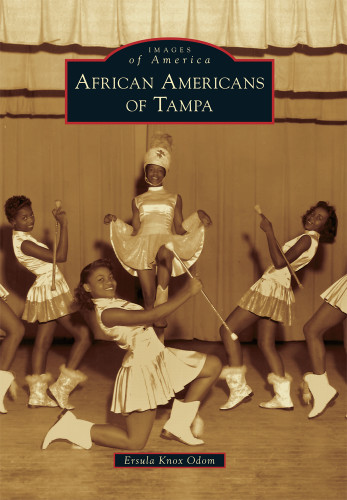
Ersula K. Odom is CEO of Sula Too LLC, a legacy writer, the author and co-author of several books including African Americans of Tampa and her poetic memoir – At Sula’s Feet. She is a motivational speaker, creates legacy walls, and portrays Mary McLeod Bethune as a one-person show. As founder of Sula Too, LLC she has published books for clients from Georgia to California. She was raised in Georgia, graduated from Eckerd College and is deeply rooted in Tampa with business, family, and friends. 

Recent commendations: Signed copy of Congressional Record of Dr. Bethune’s decision to place her stature in Statuary Hall in DC presented to her by U.S. Senator Bill Nelson.  Performance written about in the Wall Street Journal. She received separate commendations from Tampa City Council Commendation for her roles as co-founder of Fortune Friends and as member of the Citizens Advisory Committee on the Economic Impact of Cultural Arts. 

As a motivational speaker, Ms. Odom has the uncommon ability to relate to multi-generational and multi-cultural audiences by sharing experiences from such areas as rural living, college life, Fortune 500 corporate management, spirituality, being a mother, entrepreneurship, sales, and genealogy to publishing books. 

Today, the title of her performance is “Dr. Mary McLeod Bethune Comes to Life.” Dr Bethune “comes to life” during the 1950’s to share  her thoughts regarding  her life’s story.   She will then answer questions. After Dr. Bethune leaves the stage, Ersula will answer questions regarding her research and personal journey. www.sulatoo.com . She also leads black history walking tours of Tampa for the Tampa Bay History Center.


1. How and/or when did you get you hooked on history?


My earliest memory is crawling under my grandmother’s bed and retrieving a box full of wonder. A “Have a Tampa” cigar box full of old photos, letters, stamps and a lot of my grandmother’s sister’s hair. I have been hooked on such things since that moment.


2. What role does history play or has it played in your personal life?


I am my family’s historian. The go to person for the family tree and keeper of the memories

I authored my first book  At Sula’s Feet which is rooted in those memories. Life lessons learned at my grandmother’s feet. I remembered and wrote about the wit and wisdom that made my childhood sweet.

And I formed a publishing company to help others tell their stories. 


3. How is/How was history a part of your professional life/career?

Publishing company focus


I formed a publishing company to help others tell their stories. Everyone has at least one story that circle around their head and exits far too many times to the same people. Sula Too Publishing helps these people release the stories to the universe in search of those who may need them.


4. Why is studying/knowing history important?


History shortens the time and path to informed decisions.


5. What is your favorite period or aspect of history to learn about and why?


Post slavery through 1950s because I know these people. They were my parents, grandparents, aunts and uncles. They were bits of me.


6. How did you start telling the African -American story of Tampa and Florida?


I was a reporter and then editor for The Weekly Challenger News which led to my writing, photographing and collecting local stories. 


I was approached by Arcadia Publishing to write a book. Accepting this opportunity set me on the joyous journey of wandering through 15,000 archived photos and going house to house in searching to the names of the faces I held in my hands.


7. Why is telling local African-American history so important ?


It is now so timely. The students are ready. Lessons can be learned that will help make sense of the world we live in.

History is the key to understanding humanity, life situations and people.

History aids in “predicting the future”